Choosing the right lighting fixtures is an essential step for the success of any project. Whether you work in an industrial, commercial, or office space, the right lighting can improve functionality, productivity, and overall atmosphere. In this article, we will explore the essential steps to selecting the most suitable technical lighting fixtures adapted to your project’s specific needs.
1. Assess Space Needs
The first step is to evaluate the space where you will install the technical lighting. The size and configuration of the space play a crucial role in determining the type and number of lighting fixtures needed. For example, a large industrial space will require an even distribution of light, using industrial lighting fixtures that can cover large areas without leaving dark areas. Conversely, an office space may require lighting fixtures that provide directional light, suitable for precision tasks such as those in the Office family. In addition, they also have a low UGR (the index used to assess the discomfort glare produced by a lighting system), which determines increased visual comfort.

2. Think About the Type of Activity Carried Out In the Space
The specific activities in that space determine the type of lighting needed. For example, in a production space, strong and uniform lighting is essential to prevent accidents and ensure efficient work. On the other hand, in a store, the lighting must highlight the products and create a pleasant atmosphere for the customers. In this situation, we recommend rail systems for high flexibility. Offices, on the other hand, require lighting that reduces eye strain and increases employee productivity.
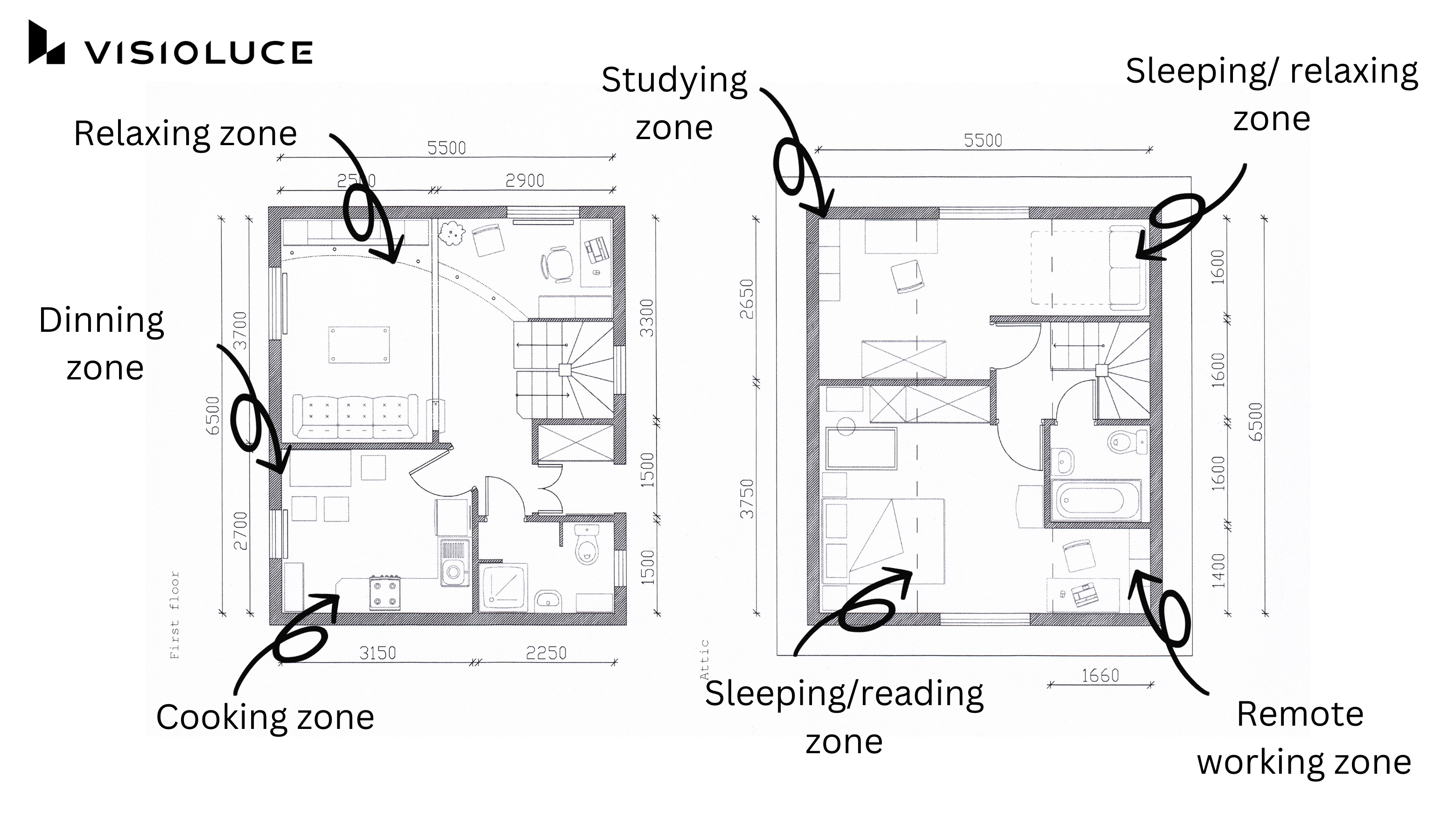
3. Get the Correct Illuminance
The level of illumination required is a crucial factor in the choice of lighting fixtures. The illuminance of a surface is measured in lux (lx) and must be adequate for the activities carried out in that space. For example, in office spaces, an illuminance of about 500 lx is adequate, while industrial spaces may require an illuminance of up to 1000 lx or more, depending on the industry. It is recommended that you consult a lighting specialist to determine exactly what level of illuminace is required for your space.

4. Consider Energy Efficiency
Energy efficiency is an increasingly important aspect when choosing lighting fixtures. Modern technologies, such as LEDs, offer superior efficiency compared to traditional lighting sources. Although the initial investment may be higher, operating costs are considerably reduced in the long term due to reduced energy consumption and extended lifetime. In addition, energy-efficient lighting fixtures help reduce the carbon footprint of your project. For example, our luminaires from the Titan series also reach efficacies of 130 lm/W.
5. Choose the Appropriate CCT
The colour temperature of the light directly influences the atmosphere and visual perception of the space. Color temperature is measured in Kelvin (K) and can range from warm light (2700K-3000K) to cool light (5000K-6500K). The warm lights create a comfortable and relaxing atmosphere, being ideal for reception spaces or relaxation areas. On the other hand, cool lights are suitable for work or production spaces as they stimulate concentration and increase productivity.

6. Check the IP
Depending on the environment in which the lighting fixtures will be installed, you must consider the degree of IP (Ingress Protection) protection. It indicates the light fixtures’ resistance to dust and water. For example, in an industrial environment with dust or moisture, it is essential to choose lighting fixtures with a high IP rating to prevent damage and ensure safe and durable operation. In outdoor spaces, where exposure to rain is direct, an IP degree of protection of at least 65 is recommended.
7. Light Distribution – an Essential Factor in Lighting Efficiency
Light distribution is how light is dispersed in space. This influences the uniformity of the lighting and avoids the appearance of shadows or areas with insufficient light. A light fixture with a well-designed light distribution ensures uniform surface coverage and minimizes visual discomfort caused by excessive or uneven light. For example, if you place a light fixture with a narrow distribution at a short distance from the table, the result will be a bright circle in the centre and very dark corners. Also, the faces of those present at the table will not be visible. Conversely, if we choose a wide distribution in a very tall production space, we will have a lot of light that is lost, and far too little light to help employees perform their work tasks.

8. Integrate Smart Control Solutions
Smart lighting control solutions are becoming increasingly popular due to their benefits. They allow the automatic adjustment of the light intensity according to the presence of people or the available natural light. Motion sensors, for example, can help save energy by automatically turning off lights in unused spaces.
9. Consider Durability and Maintenance
The durability of lighting fixtures is important, especially in industrial or commercial environments, where frequent maintenance can be expensive and disruptive. Choose lighting fixtures made of quality materials, resistant to wear and difficult environmental conditions. They also opt for low-maintenance solutions, such as long-life LEDs, which reduce the need for frequent replacements and thus the associated costs.
10. Consult a Lighting Specialist
Finally, it’s always helpful to consult a lighting specialist to ensure you’ve made the best choices for your project. A specialist can correctly assess the needs of the space and recommend solutions that combine aesthetics with functionality. He can also help you navigate through the different options available and identify the most suitable solutions, thus reducing the risks associated with inadequate lighting. If you need help choosing lighting fixtures, our team is at your disposal. Do not hesitate to contact us!
Conclusion
Choosing the right lighting fixtures is a complex process, which involves a careful assessment of the needs of the space, the activities carried out and the energy efficiency requirements. By investing time and resources in the right selection of lighting fixtures, you will create a functional, energy-efficient and safe space that meets your long-term needs. Well-planned lighting not only improves comfort and productivity but also contributes to the overall success of your project.