
Lighting is more than just a functional element in a space — it is an essential component of the design, comfort and safety of every environment, whether indoor or outdoor. Whether we are talking about efficient lighting fixtures in the home or a robust floodlight mounted on the facade of a building, an often overlooked technical detail plays a crucial role in the correct choice of equipment: the IP protection rating. Few users understand the importance of this indicator when choosing a lighting product, but ignoring the IP protection class can lead to premature product damage, electrical safety risks and even additional maintenance costs. IP protection (Ingress Protection) determines the extent to which a lighting fixture is protected against the ingress of dust and water — factors that can dramatically influence a product’s performance and durability. So, let’s discover everything you need to know about the IP code, how to read it correctly, what levels are appropriate for different types of spaces — from bathrooms and kitchens, to gardens or industrial halls — and why the right choice makes the difference between durable lighting and costly failure.
What does IP mean and why does it matter?
You may have already noticed that when you search for lighting fixtures, the description includes a code consisting of two letters followed by two numbers, for example, IP65, IP44 or IP20. This code is not a minor detail or a factory code – on the contrary, it is one of the most important criteria when choosing the right light source for a particular space. IP stands for Ingress Protection and refers to the level of protection of the housing of an electrical device against the ingress of solid objects (such as dust) and liquids (such as water).
In short, this index tells you how well a lighting fixture is protected from external factors. And, if you want to install a projector on a facade, an LED strip in a bathroom, or a spotlight in an industrial area exposed to dust and moisture, then IP becomes essential. The wrong choice does not only mean discomfort or poor performance, but can even lead to complete product failure or electrical risks.
How is the IP code read?
What do the two numbers mean?
The IP code is followed by two digits:
– the first digit indicates the level of protection against solid objects and dust, on a scale from 0 to 6;
– The second digit indicates the level of protection against liquids, also on a scale from 0 to 9.
For example:
– IP20 – protected against solid objects larger than 12.5 mm (e.g. fingers), but not protected against water. Suitable for dry, indoor spaces;
– IP44 – offers good protection against both solid objects (larger than 1 mm) and water splashes from any direction. Ideal for bathrooms or partially covered exteriors;
– P65 – completely dust-tight and protected against jets of water. You can use such lighting fixtures without worries outdoors, in courtyards or on facades;
– IP68 – completely waterproof and resistant to prolonged immersion in water. It is used in special environments, such as artesian wells or swimming pools.
Choosing the right IP for each space
Dry interior spaces
For areas such as bedrooms, living rooms or offices where there is no exposure to moisture, an IP20 is often sufficient. This provides protection against solid objects larger than 12.5 mm, but does not provide protection against water. It is ideal for pendant lighting or recessed ceiling spotlights.
Bathrooms and kitchens
In these spaces, where humidity is high, an IP44 or higher is recommended. This provides protection against splashing water and solid objects larger than 1 mm. For areas directly exposed to water, such as showers, an IP65 or IP67 is ideal, providing protection against jets of water and even temporary immersion.
We invite you to explore our entire range of indoor lighting fixtures – modern, efficient and personalised solutions, created to transform any space into a memorable lighting experience.
Outdoor spaces
For outdoor lighting such as gardens, wall sconces or path lights, an IP rating of IP44 or higher is generally considered sufficient. These lights are resistant to solid objects over 1mm and are protected against water splashes from all directions, making them an ideal option for use in such spaces.
For example, if you are interested in powerful and efficient lighting solutions for various applications, including sports fields, parking lots and building facades, an ideal solution may be the Proton II series from Visioluce. These luminaires stand out for their durability and superior performance. They are equipped with uniform light distribution and low energy consumption. Proton II ensures excellent visibility and increased security, whether it is lighting a sports field for night training, ensuring a well-lit parking lot or spectacularly highlighting building facades.
Why choose Visioluce for your lighting solutions?
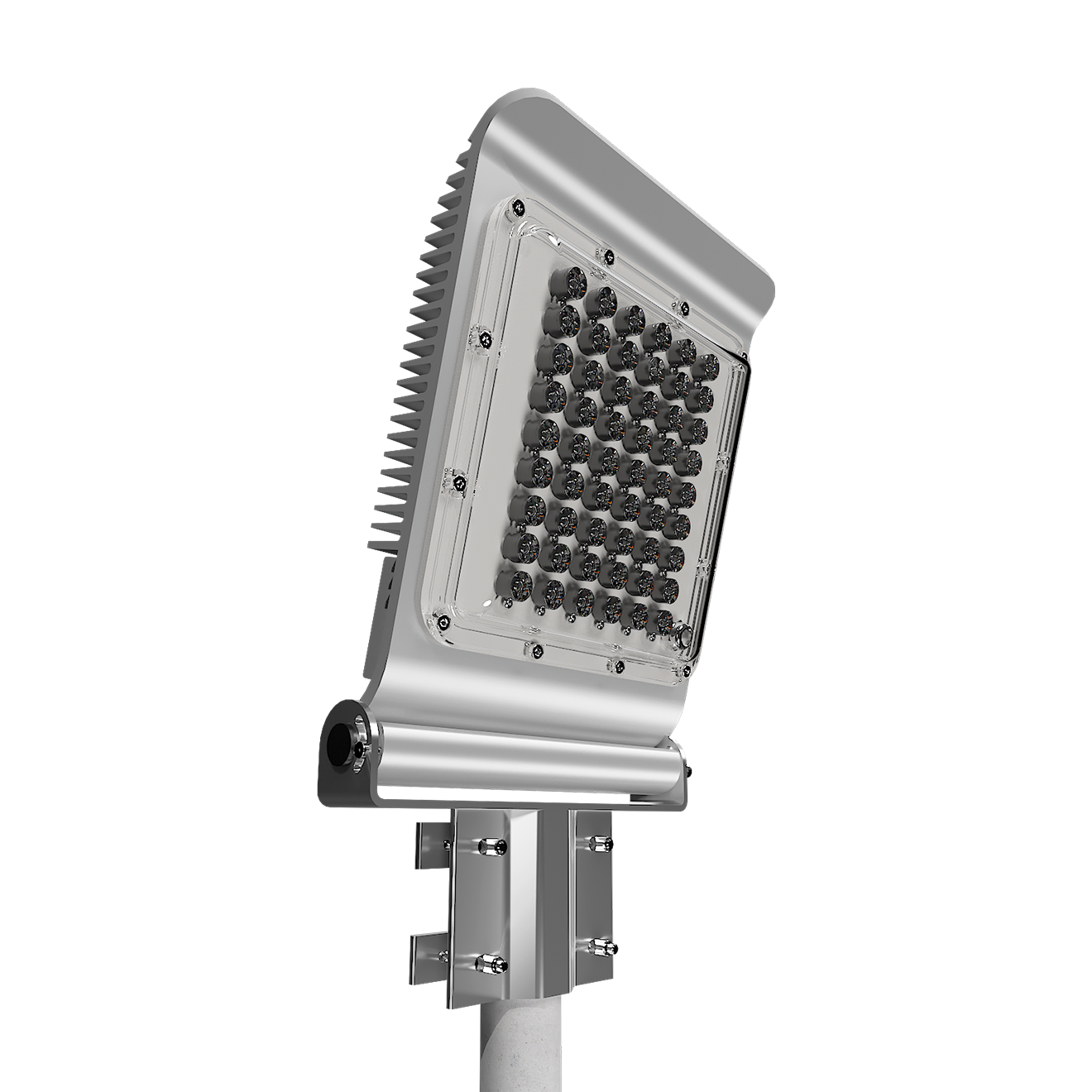
Visioluce offers a wide range of technical lighting fixtures, adapted for various applications, from residential to industrial spaces. Our products are designed and manufactured in Petroșani, Romania, ensuring strict quality control and innovation.
We offer personalised consulting services and lighting simulations using specialised software such as Dialux Evo. These allow you to visualise and adjust the project before implementation, ensuring a result that meets your exact requirements.
Choosing the right IP protection for your lighting fixtures is essential for the safety and durability of your installations. Whether you are designing an indoor or outdoor space, it is important to select products suitable for the specific environmental conditions.
At Visioluce, we are dedicated to providing you with high-quality lighting solutions tailored to your needs. Contact us to discover our wide range of products and benefit from our expertise in designing efficient and aesthetic lighting systems.


