When choosing LED linear fixtures for interiors (offices, commercial spaces, corridors, technical areas), you are concerned with design details, luminous flux and visual comfort. However, one technical detail can decide the lifespan of the fixture and the safety of its operation: the IP protection class. At Visioluce, the indoor linear series (for example, Noven or the Arvio family) are designed for professional lighting, and choosing the right IP depends primarily on humidity, splashes, dust and the type of cleaning in each space.
What does IP (Ingress Protection) mean and why does it matter for LED linear fixtures?
IP (Ingress Protection) is an international standard that indicates the level of protection a luminaire provides against the ingress of dust and water. The IP code consists of two digits, each with a well-defined role. The first digit shows how well the luminaire is protected against solid particles, such as dust, and the second digit indicates the resistance to water, splashes or moisture.
For LED linear fixtures, the IP protection class of the lighting is important because these fixtures are often used in spaces with different requirements, from offices and dry commercial areas, to bathrooms, kitchens or technical spaces. An LED linear fixture with an appropriate IP class operates correctly and safely in the environment for which it was designed, without the risk of damage caused by moisture or dust.
Choosing the right IP class directly contributes to increasing the lifespan of the luminaire, maintaining its light performance and reducing maintenance costs. At the same time, it ensures compliance with safety regulations, especially in spaces where there is frequent contact with water or wet cleaning procedures.
Visioluce LED linear fixtures for interiors: examples of relevant specifications
In the range of linear systems for interiors, Visioluce presents solutions oriented towards visual comfort and optics adapted to the application:
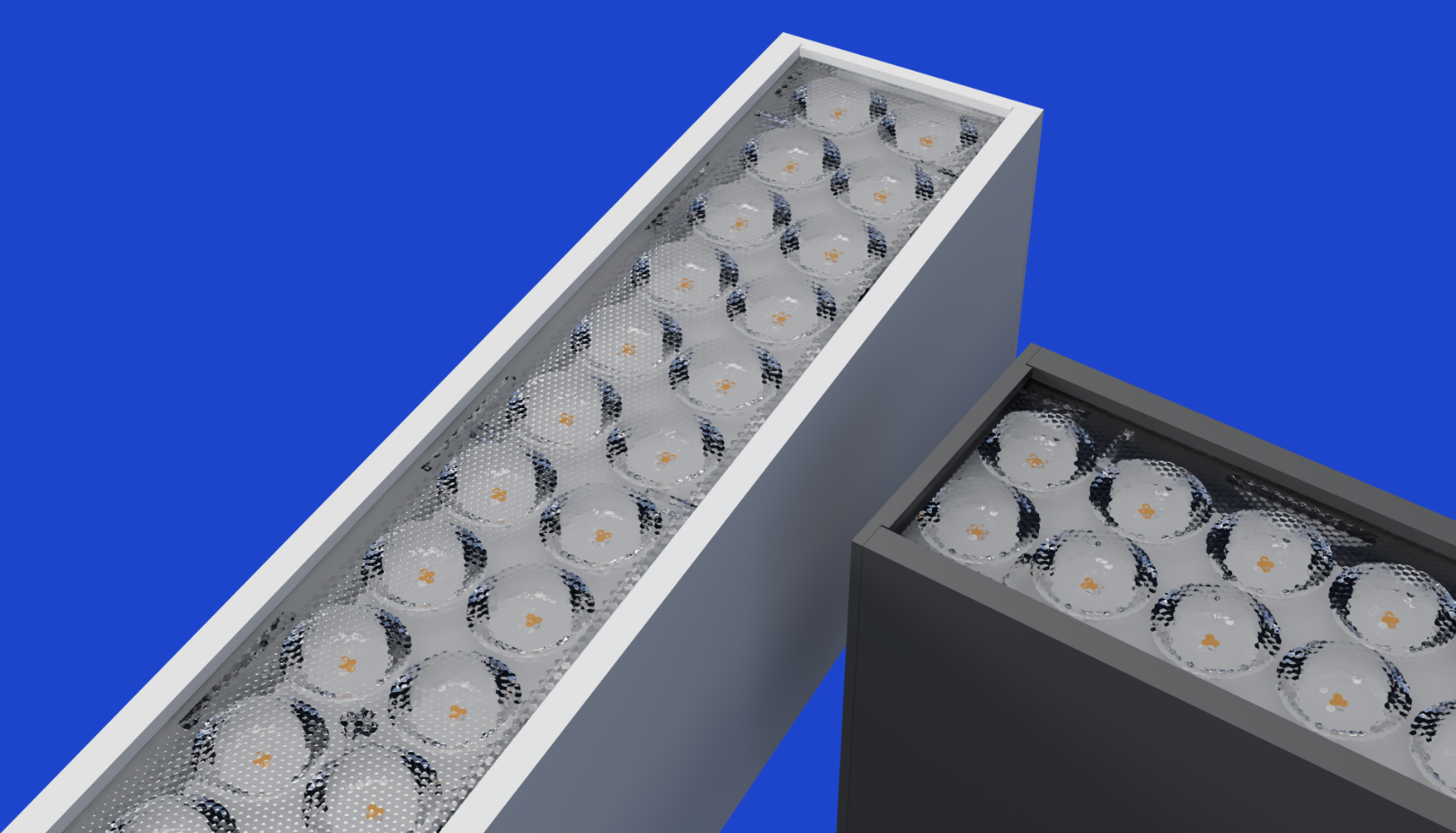
-Noven: linear fixture for offices and commercial spaces, with optical options (medium/wide/extra-wide, wall washer, double asymmetric), 220–240V AC power supply, aluminum housing, control options (DALI/on-off) and IP20.
-Arvio (e.g. Arvio 5): linear LED fixture for offices, commercial spaces and industrial environments, with anti-glare multiprismatic diffuser, compatible with intelligent control (DALI, 1–10V), IP20 and IK10 mechanical resistance (useful in spaces with a risk of impact).
Many indoor lighting fixtures are designed as standard for dry spaces (IP20), and for areas with moisture/splash you need a specific selection (or a dedicated solution).
Which IP class do you choose depending on the space (indoors)?
Offices, meeting rooms, showrooms, “dry” commercial spaces
In such spaces, exposure to water is practically non-existent, and the main risk is from contact and ordinary dust. For these situations, IP20 is usually sufficient – exactly Visioluce’s recommendation for “dry interior spaces” and exactly the level found in linear series such as Noven or Arvio.
Here it matters more:
-glare control (diffusers/anti-glare diffusers);
-light distribution (uniformity on desks/shelves);
-color rendering quality (high CRI in commercial spaces).
Kitchens, preparation areas, spaces with occasional steam
For residential kitchens or back-office areas where steam occurs and there is the possibility of accidental splashing, Visioluce generally recommends IP44 or higher in areas with high humidity.
In practice, you can think of it like this:
-in “dry” areas (ceiling, circulations) IP20 remains reasonable;
-near sinks, washing areas, areas where it is frequently wiped with damp cloths: go up to IP44.
Bathrooms: the difference is made by “zones” (near the water vs. the rest of the room)
Bathrooms are the classic space where IP is really not a fad. Visioluce indicates:
-IP44 or higher for bathrooms, as good splash protection;
-for areas directly exposed to water (for example near the shower), IP65 or IP67 becomes a suitable choice, as we are talking about water jets and even temporary immersion (in some technical situations).
If you want a simple rule: the closer the body is to the water source and repeated splashing, the higher the IP required.
Laundries, technical rooms, changing rooms, cleaning areas
In these spaces they frequently appear:
-condensation;
-steam;
-wet cleaning;
-powdered cleaning agents.
Technical areas, utility rooms, warehouses with high humidity should also include Visioluce linear fixtures with IP65. Here, you can use ceiling-recessed or surface-mounted models. Discover the range of ceiling-recessed or surface-mounted lighting fixtures.
5) Industrial halls (indoors), warehouses, dusty areas
In industry, the problem is not only water, but also dust (the first digit in IP). Visioluce mentions the use of linear fixtures/LED panels for continuous lighting in halls (e.g. between shelves/technological lines), which makes choosing the right environmental protection even more important.
Here, IP selection is done according to:
-how much fine dust there is;
-if the space is cleaned “wet”;
-if there is steam/condensation (cold storage, production areas).
In “clean and dry” industrial areas, IP20 may be sufficient (especially when anti-glare and uniformity are important). In areas with increased dust/humidity, a move to higher IPs is justified, according to the principles explained in the Visioluce IP guide.
Common mistakes when choosing IP for indoor linear fixtures
A typical mistake is to choose the IP “by instinct” (or just by price), without looking at:
-how often the space is washed;
-whether there is repeated spraying or just general humidity;
-what happens during maintenance (wet cloths vs. jet).
For indoor Visioluce LED linear fixtures, the choice of IP starts from the reality of the space: IP20 for dry areas (offices, showrooms, most commercial spaces), IP44 where humidity and splashing are common (kitchens, bathrooms in general areas, laundries), and IP65/IP67 in areas with direct contact with water (for example near the shower or in spaces with intensive cleaning).
Frequently asked questions about Visioluce LED linear fixtures and IP classes
Here’s what you need to know when carrying out a project that requires lighting design, energy efficiency, and protection in use:
What does the IP protection class mean for a linear LED fixture?
The IP (Ingress Protection) rating indicates the level of protection a luminaire has against the ingress of dust and water. It consists of two digits: the first indicates the protection against solid objects and dust, and the second indicates the protection against water or moisture. The correct choice of IP influences the safety and lifespan of the LED luminaire.
What IP class is suitable for LED linear fixtures in offices?
For offices, meeting rooms, dry commercial spaces or showrooms, IP20 is sufficient in most cases. These spaces are not exposed to moisture or splashes, and Visioluce indoor LED linear fixtures are designed exactly for this type of use.
Is IP44 required for kitchens or bathrooms?
Yes, an IP44 protection class is recommended in kitchens and bathrooms, as these spaces are exposed to steam, condensation and splashing water. IP44 offers additional protection over IP20 and is suitable for most indoor wet areas.
When is an LED linear fixture with IP65 or IP67 required?
IP65 or IP67 ratings are recommended for areas where there is direct and frequent contact with water, such as areas near showers, water-jetted technical spaces or certain indoor industrial areas. These ratings provide high protection against moisture and water ingress.
Can I use an IP20 LED linear fixture in a bathroom?
An LED linear fixture with IP20 can only be used in areas of the bathroom that are completely protected from splashes and excessive moisture, for example in areas away from the bathtub or shower. In practice, for safety and durability, it is recommended to choose a higher IP for bathrooms.
Why is it important to choose the correct IP class and not just the design?
Design and lighting performance are important, but the IP rating ensures the correct operation of the luminaire in real space conditions. An incorrectly chosen IP can lead to premature failure of the LED body, safety issues and additional maintenance costs.
Are Visioluce LED linear fixtures available with multiple IP classes?
Yes, Visioluce offers lighting fixtures designed for different applications, from dry indoor spaces to areas with high humidity. The choice of IP class is made depending on the purpose of the space and the actual operating conditions.
How do I choose the correct IP class for an interior lighting project?
To choose the right IP class, it is important to analyse the humidity level, the possibility of splashing, the cleaning method and the type of space. In professional projects, it is recommended to consult the manufacturer’s technical specifications and adapt the IP to each individual area.
Choosing the right IP class is essential for the safety and durability of indoor LED linear fixtures. With Visioluce professional solutions, lighting projects benefit from performance, reliability and specifications adapted to each space. Discover the Visioluce LED linear fixture range and choose the right solution for your project!


