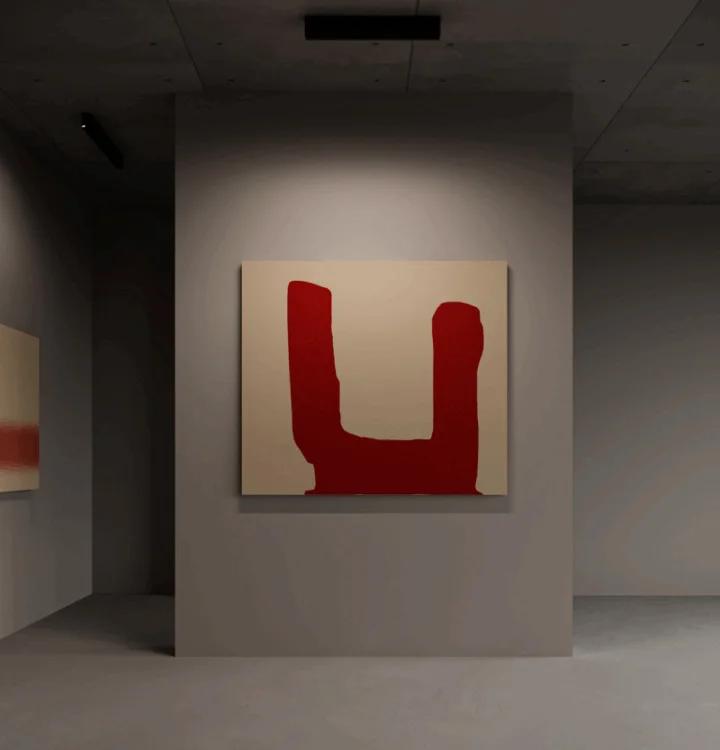
Light is one of the most powerful tools of expression in a museum. It not only makes art visible, but also shapes its perception, defines its volume and conveys its emotion. Choosing the right type of architectural lighting and technical lighting influences how the public connects with the exhibits, but also how they are preserved in the long term. Therefore, designing a lighting design for museums does not just mean installing light fixtures, but a complex curatorial strategy that balances visibility, protection and atmosphere.
Next, we will explore the main types of lighting used in museums – from general and accent lighting, to decorative and technical solutions – and how they contribute to a coherent and captivating visual experience.
The role of lighting in cultural spaces
Why are lighting designs important in museums and art galleries? The right light can completely transform the perception of a painting or an object on display, emphasising details, volumes and colours in a way that cannot be achieved with natural light. In libraries, functionality and visual comfort are important: uniform and well-balanced lighting supports concentration, reduces eye fatigue and creates a relaxing atmosphere. Therefore, the design of the lighting system must be based on a detailed lighting analysis and the choice of appropriate luminaires for each type of space and use.
Essential technical criteria for professional lighting
What to consider when choosing ambient lighting, accent lighting, decorative, technical and safety lighting for public places with cultural purposes?
UV and IR radiation control
Heritage objects, textiles or paintings are sensitive to ultraviolet and infrared radiation. That is why modern fixtures with LED technology are ideal, as they emit light without UV or IR components, reducing the risk of damage.
Color rendering index (CRI)
To faithfully reproduce shades, a CRI above 90 is recommended so that colors are perceived naturally, especially in the case of works of art.
Light distribution
Each type of space needs a different approach:
-Uniform distribution for shelves, walls and reading areas in libraries;
-Directional distribution for highlighting exhibits in museums or galleries;
-Adjustable systems/track lighting for temporary exhibitions or spaces that are frequently reconfigured.
Color temperature
-Warm light (2700–3000 K) for an intimate and relaxed atmosphere in libraries or reading rooms;
-Neutral light (3500–4000 K) for museums and galleries, where natural color rendering is important.
Essential steps for choosing the right lighting system
Here are the stages that must be followed in a lighting design project for museums, libraries and other types of cultural spaces:
-
Analyze the space and its function
Every space has different needs: a library requires uniform and neutral lighting, a museum requires beam control and moderate intensity, and an art gallery needs bright scenography.
-
Evaluate the objects on display
Determine which materials are sensitive to light. Paper, textiles or organic pigments should be protected by UV/IR-free LED fixtures and by reducing direct exposure.
-
Define the lighting level (lux)
| Illumination levels (lux) | Recommendation (luxury) |
|
Highly sensitive (e.g. watercolors, historical photographs, textiles)
|
Maximum 50
|
|
Moderately sensitive (e.g. oil paintings, wood, leather)
|
Maximum 150 |
| The least sensitive (e.g. metal, stone, ceramic, glass)
|
Maximum 300 |
|
Sculptures and paintings (accent lighting)
|
100 to 1000 (high quality)
|
|
General exhibition areas
|
150 to 500 |
|
Corridors and hallways
|
100 to 200 |
|
Entry |
150 to 300 |
-
Choose the right fixture type
Select lighting fixtures suitable for each area:
-Adjustable track spotlights (e.g. Rory A15, Rory A25 adjustable track luminaires adapted for 220-240V/AC track or Zoomix, adjustable track luminaire for 48V/DC low voltage magnetic track;
-useful for exhibitions where you frequently change the configuration or for temporary accents;
-DALI control or similar – for automatic adjustment of intensity and temperature, quickly adapting the atmosphere of a room depending on the event or time of day.
Combine Taskray 2.0 for functional lighting, Noven for decoration, and spotlights/projectors to highlight exhibits. This way, you achieve a balance between aesthetics and practicality.
-
Includes an intelligent control system
Presence sensors and automatic intensity adjustment optimise consumption and protect exhibits.
-
Test lighting scenarios
After installation, it is recommended to adjust the angles and intensity to avoid shadows, reflections and overexposed areas.
Practical solutions and product examples
Taskray 2.0 – precision functional lighting
Taskray 2.0 is a technical and efficient system, designed for spaces that require light uniformity and precise control. Ideal for libraries and archives, it provides a neutral, constant and comfortable light for reading and studying.
-Optimal light distribution for large areas;
-Advanced light intensity control;
-LED technology with long lifespan and low consumption.
Taskray 2.0 stands out for its minimalist design, easy to integrate into modern architectures, offering a balance between functionality and discreet aesthetics.
Noven – decorative solution for lighting design
Noven decorative lighting fixtures are suitable for art galleries, exhibition spaces or library lounge areas. With their elegant design and diffused light, they create a warm and welcoming atmosphere and complement technical lighting, as follows:
-Creates spaces with high aesthetic value;
-Available in multiple finishes and shapes;
-They can be combined with other technical fixtures for a balanced visual effect.
-Noven adds a subtle aesthetic accent to the space, without distracting from exhibits or artwork.
Spotlights and projectors to highlight exhibits
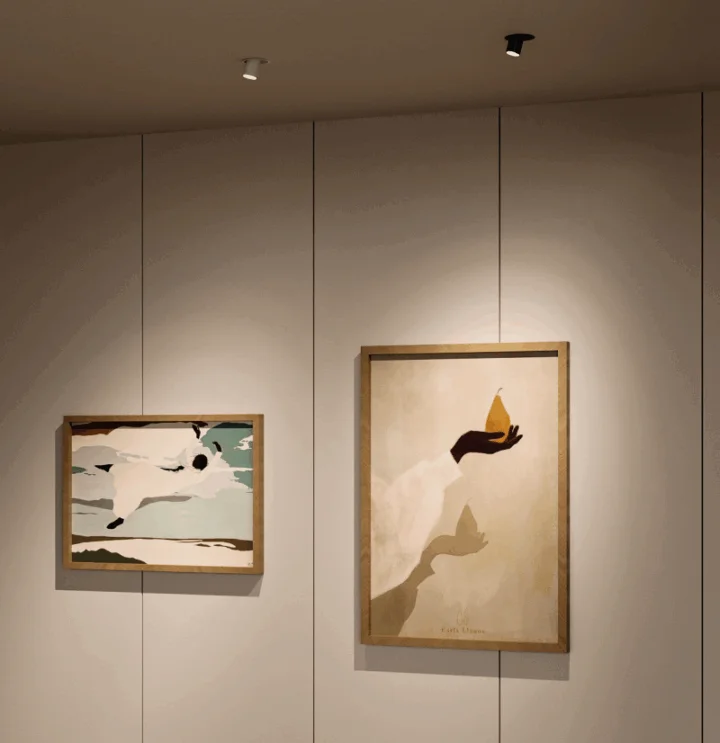
For museums and galleries, adjustable spotlights and LED projectors are indispensable tools. They allow precise beam control so that each exhibit is illuminated exactly in the desired area.
-Spotlights on electric tracks – flexible, easy to reposition;
-Adjustable angle projectors – ideal for sculptures and three-dimensional objects;
-Variants with neutral or warm light, depending on the tone of the exposed materials.
By using spotlights and projectors correctly, layers of light are achieved, which provide depth to a cultural space. Thus, subtle scenographic effects are created, which transform an exhibition, an art gallery, a reading room into a captivating visual experience.
|
Product / Solution
|
Illuminated type
|
Recommended use
|
Key features
|
Main benefits
|
|
Taskray 2.0 |
Functional, technical
|
Libraries, archives, study rooms
|
LED linear body, neutral light (4000 K), intensity control, uniform distribution
|
Comfortable, uniform and energy-efficient lighting; suitable for reading and work areas
|
|
Noven |
Decorative, ambient
|
Art galleries, cultural spaces, relaxation areas
|
Elegant design, diffused warm light, multiple finishes, suspended or surface-mounted mounting
|
Creates atmosphere, accentuates architecture and complements technical lighting
|
|
LED track spotlights
|
Directional, accent
|
Museums, temporary exhibitions, showcases
|
Adjustable angle, CRI > 90, UV/IR free, narrow or medium beams
|
Highlights exhibits without damage, flexibility in repositioning
|
|
LED projectors
|
Strong/architectural accent
|
Contemporary art areas, sculptures, three-dimensional objects
|
High power, angle adjustment, DALI / dimming control
|
Precise highlighting, scenographic effects, design flexibility
|
How does the psychology of light work? In museums, lighting should highlight the shape, color, and texture of exhibits. LED track spotlights offer maximum flexibility — they can be repositioned according to exhibits and adapted to temporary exhibitions. For three-dimensional artworks, adjustable LED spotlights allow for the emphasis of volume and subtle shadows, adding depth and drama.
In libraries, the emphasis is on uniformity and visual comfort. Taskray 2.0 provides a constant, neutral light with intensity control, ideal for reading and studying. In common or relaxation areas, Noven brings an aesthetic addition with warm, diffused light, which creates a pleasant and relaxing atmosphere.
The benefits of a professional lighting system
-Heritage preservation: LEDs without UV/IR emissions protect fragile objects;
-Energy efficiency: low consumption and long lifespan of the bodies;
-Flexibility: configurable solutions, easy to adjust for new exhibitions;
-Aesthetics and comfort: the combination of functional and decorative light enhances the visitor experience.
Frequently asked questions about lighting for cultural spaces
Here’s what you need to know about lighting for museums and other cultural spaces:
What type of lighting is recommended for museums and art galleries?
For museums and galleries, directional and controllable lighting is recommended, achieved by LED track lights or adjustable projectors. These allow the precise orientation of the light beam on the exhibits, without damaging sensitive materials. Ideally, the light should have a CRI above 90, without UV or IR radiation.
How can I protect sensitive exhibits from the damaging effects of light?
Protection is achieved by using LED light sources, which do not emit ultraviolet (UV) or infrared (IR) radiation. It is also important to limit light intensity (below 200 lux for fragile materials) and use automatic control systems that reduce light when the area is not visited.
What color temperature is suitable for libraries?
For libraries, neutral or warm light (3000–4000 K) is ideal. This ensures long-term visual comfort and protects printed materials from overexposure. Functional solutions such as Taskray 2.0 provide uniform, balanced and energy-efficient light.
How can I combine functional and decorative lighting?
The optimal combination is achieved by using technical fixtures for main lighting (e.g. Taskray 2.0) and decorative fixtures (e.g. Noven) for atmosphere and visual accents. This creates a balance between performance, comfort and aesthetics, without distracting from the exhibits.
What advantages does the use of track systems offer in cultural spaces?
Track lighting systems offer maximum flexibility: luminaires can be quickly repositioned to suit changing exhibits or areas. This is an ideal solution for museums and galleries hosting temporary exhibitions.
How do I choose the correct lighting level (lux)?
The level of illumination depends on the type of object being exposed:
-Sensitive exhibits: up to 200 lux;
-Reading areas: 300–500 lux;
-Sculptures and paintings: 150–300 lux, depending on material and colours.
It is recommended to test before opening the space and adjust the intensity through integrated control systems.
Why is intelligent lighting control important?
Intelligent control (through presence sensors or automatic adjustment) optimises energy consumption and extends the lifespan of exhibits. In addition, it offers the possibility to adapt the intensity and atmosphere depending on the time of day or type of event.
What benefits do modern LED fixtures offer in museums and libraries?
LED fixtures offer high energy efficiency, long life and superior color fidelity. They are friendly to exposed heritage, do not emit excessive heat and can be precisely controlled to achieve subtle and harmonious visual effects.
What solutions do you recommend for highlighting exhibits?
To highlight the exhibits, it is recommended:
-Adjustable LED spotlights – for directional, controlled light;
-LED projectors – for three-dimensional objects or large spaces;
-Noven fixtures – for decorative addition to the atmosphere;
-Taskray 2.0 – for uniform lighting of transition or reading areas.
How does lighting contribute to the visitor experience?
Lighting emotionally influences the perception of space: it creates depth, highlights details, guides the eye and induces the desired mood. A properly lit exhibition becomes a memorable experience, not just a simple visit.
Through its expertise in architectural and technical lighting projects, Visioluce offers customized solutions for each type of cultural space, combining energy efficiency, light quality and technological innovation. Each project is treated with attention to detail and respect for the visual identity and cultural value of the space.
If you want a lighting system that highlights art, knowledge and emotion, contact the Visioluce team for a dedicated consultation. Discover how light can transform a cultural space into a complete experience – precise, protected and full of visual harmony.


