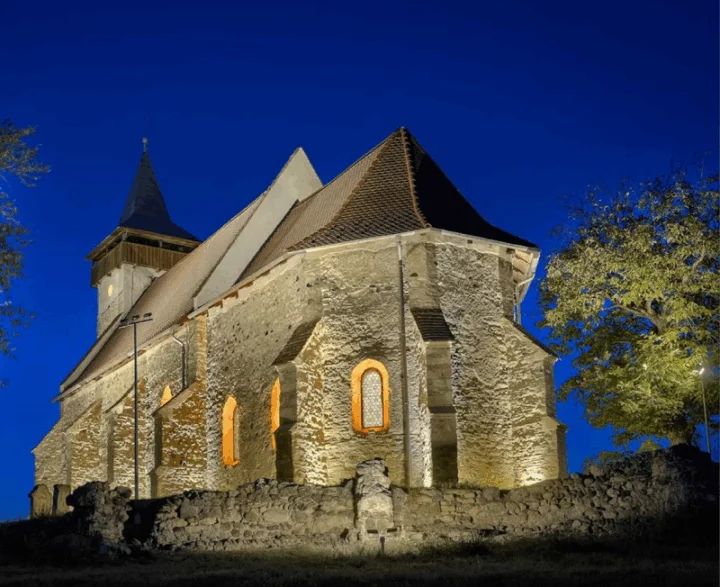
Architectural lighting for heritage buildings plays an essential role in restoration, conservation and valorisation. Careful lighting planning can highlight ornamental details, the texture of historical materials and special architectural proportions. Moreover, modern solutions allow for discreet integration into the structure of old buildings, respecting the intervention restrictions imposed by the heritage status. Thus, the right lighting can transform a historic facade into an attractive nighttime visual landmark, increasing the cultural and tourist value of the object.
Why we use architectural lighting for protected buildings
“Architecture is inhabited sculpture” said Constantin Brâncuși, and the wisdom of these words accompanies each Visioluce project, for:
Protecting cultural value and integrity
Heritage buildings are often constructed with traditional materials, fine ornamentation or structures sensitive to modern interventions. A well-thought-out architectural lighting design takes these aspects into account, using luminaires adapted for indoor and outdoor use, specifically provided for such applications. Through testing, prototyping and simulations, luminaires can be developed that are not only aesthetic, but also adapted to preserve the original material.
Faithful reproduction of textures and ornamental details
Architectural materials in historic buildings – natural stone, ornate plaster, carved wood, classical elements – have characteristics of relief, pattern and finesse that can be emphasised or softened depending on the direction and intensity of the light. Uplighting (placing sources at the base of facades or corners) is a very useful technique for creating plays of light and shadow that highlight columns, arches, pediments or other decorative reliefs.
Compliance with historic preservation regulations
Monument buildings or heritage sites in public spaces are subject to strict regulations: interventions must respect the original elements, not modify the structure and not destroy the decorative elements. Lighting solutions must be discreetly integrable, without invasive interventions that affect the facades or interior of the buildings. Therefore, lighting fixtures specially developed for public spaces, monuments or outdoor applications can be used, which integrate well from a design point of view.
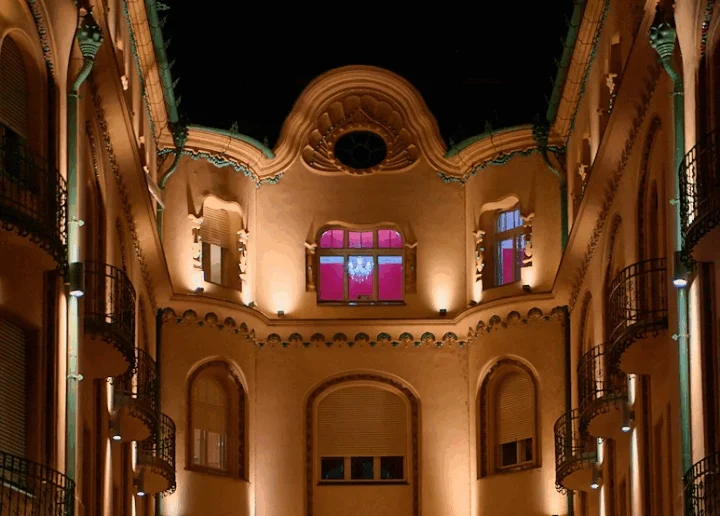
Benefits of architectural lighting for heritage
Architectural lighting brings numerous aesthetic, functional and cultural advantages, contributing to the protection, enhancement and revitalisation of heritage buildings:
Increasing visibility and tourist attractiveness
A properly lit historic building becomes a visual reference point in the nighttime cityscape. Proper lighting not only renders architectural details, but also creates a pleasant visual experience for citizens, tourists or the local community. Thus, heritage sites (places of worship, old houses, museums) can be more visible at night, contributing to the aesthetic identity of the city and promoting cultural tourism.
Energy efficiency and sustainability
Modern technologies allow the use of energy-efficient LED sources, dynamic dimming or intelligent control systems, which can reduce energy consumption and maintenance costs. This is especially important for large buildings or public facilities that require extensive lighting during the night. Such solutions also contribute to reductions in emissions and operating costs.
Flexibility in design and customization
One of the strengths of architectural lighting design is flexibility: choice of light temperature (warm/neutral/cool colour), direction of sources, light intensity, spatial distribution (directional spotlights, contour lighting, accent, wash). For historic buildings, warm temperatures are often preferred, which preserve the original tones of the materials and evoke an authentic atmosphere.
Recommended fixture suggestions/lighting solutions
-decorative hanging fixtures for historical interior spaces (halls, rooms with ornate ceilings, classical elements);
-recessed spotlights or adjustable spotlights to accentuate decorative elements (columns, arches, murals, frescoes);
-linear LED profiles for contour lighting or indirect lighting, to emphasize architectural contours without heavy shadows or disturbing direct light;
-weatherproof outdoor lighting fixtures, with discreet finishes, for lighting facades or exterior ornamental elements.
|
Solution / lighting fixture type
|
Application (interior/exterior/architectural)
|
Highlighted features/advantages
|
Usage recommendations for heritage buildings
|
|
LED pendant lighting fixtures
|
Interior, ornamental spaces or historic rooms with high ceilings
|
Careful design, fixtures manufactured with attention to detail (LED pendant fixtures for indoor spaces)
|
Ideal for historic hallways, rooms with ornate ceilings or exhibition spaces, where the suspended body can complement the architectural decor without distracting from the original architecture
|
|
Flexible LED profiles / decorative profiles
|
Interior or exterior for architectural contours, arches, cornices or curved details
|
Products with flexible frames or specialized profiles for decorative contours (e.g. 3D molded silicone profile)
|
They can be used to highlight cornices, arches or ornamental contours, including in spaces with curved elements, respecting the aesthetics of the historic
|
|
Outdoor lighting fixtures / monumental facades
|
Exterior, architectural lighting of facades, windows, exterior ornamental elements
|
Products dedicated to window or facade lighting that create special lighting effects, and weather resistance
|
Recommended for upward lighting or spotlights directed towards the facades of historic buildings, so as to highlight the ornamental details and texture of the materials (stone, plaster)
|
|
LED street lights
|
Exterior, streets, parking lots, public areas around heritage buildings
|
Energy efficiency, durability and lighting suitable for roads or outdoor spaces
|
They can be integrated into urban lighting projects for areas around monuments, to create a coherent and harmonious nighttime environment with the lighting of the heritage building. |
|
Prototyping and custom design
|
Any type of adapted application (interior, exterior, monument, exhibition space)
|
The company mentions that it uses modelling, simulation and prototyping for its LED lighting fixtures so that the products are tailored to specific projects.
|
Useful for heritage-listed buildings, where customised fixtures (dimensions, dispersion angle, special finishes) are needed to respect historical elements
|
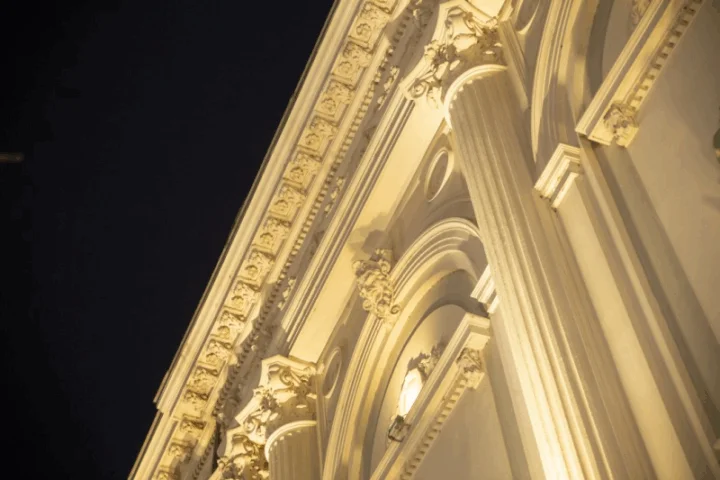
Architectural lighting project stages for heritage buildings
Creating a lighting project for museums, churches and other heritage buildings requires a careful approach, structured in several stages that ensure the balance between aesthetics, technology and respect for historical value.
Architectural audit and lighting diagnostics
Measurements, photography and light simulation of the building’s facades and interior are carried out. The structure, materials (stone, plaster, wood, metal), ornamentation, architectural elements and sensitive areas are analysed.
Customized light design
A lighting design is created that establishes the positioning of the luminaire, the type of source, the colour temperature and the intensity. For example, uplighting for facades, indirect lighting at the ceiling or cornices, and accent lighting for ornamental details.
Choosing the right lighting fixtures
Choose fixtures that have weather protection (IP suitable for outdoors), discreet finishes (e.g. complementary or translucent colors to integrate into the architecture), and options to adjust the intensity or direction of the light.
Simulation and testing
Before final editing, simulations (light, shadows, contrasts) are made to avoid overexposed areas or unwanted shadows that could distort the architecture.
Assembly and fine-tuning
After installation, the angles and intensity are adjusted, and how the materials react to light (color, brightness, reflections) is checked.
Special considerations for historic buildings
-warm light (~2700-3000 K) is used to preserve the authenticity of the materials and not modify the original tones of the stone, plaster or carved wood;
-avoid strong cold or blue lights, which can create artificial contrasts or visually damage decorative elements;
–outdoor lighting fixtures must be water/dust resistant (with a high IP protection rating) and have finishes that do not damage the facade structure;
-The installation must be discreet: cases encapsulated or integrated into existing elements, without destroying the ornaments.
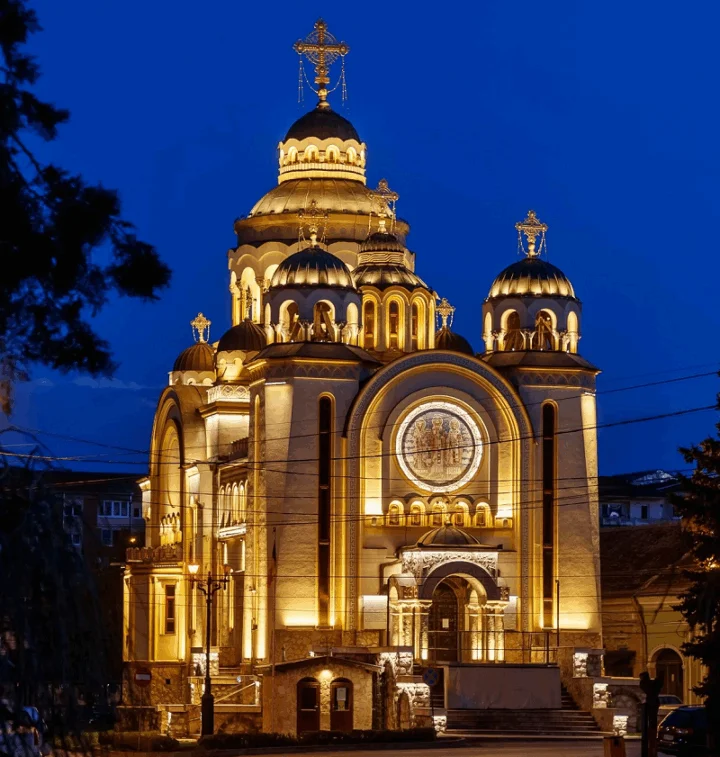
Frequently asked questions about architectural lighting for heritage buildings
For a better understanding of how lighting enhances built heritage, here are the most important aspects:
What is architectural lighting for heritage buildings?
Architectural lighting for heritage buildings means the strategic use of light to highlight the aesthetic, historical and cultural value of an old or listed building. Through customised solutions — spotlights, LED profiles, wall lights, suspended fixtures or architectural projectors — an elegant and protected enhancement of the original details is achieved.
Why is lighting important for a historic building?
Lighting serves more than just an aesthetic purpose—it serves a visual and functional conservation role. A properly lit building maintains its relevance in the urban landscape, attracts tourists, contributes to nighttime safety, and prevents material degradation through the controlled use of LED sources with the appropriate temperature (usually warm, between 2700–3000K).
What types of lighting fixtures are suitable for heritage buildings?
In a project, you can use:
-recessed spotlights for discreet lighting of interior elements;
-linear LED profiles for outlining facades or cornices;
-wall sconces for accent lighting;
-suspended fixtures for interiors with ornate ceilings.
All can be customised in intensity, angle and finish, for perfect integration into the architectural style.
What color temperature is recommended for historic buildings?
To faithfully reproduce the natural tones of materials and to avoid an artificial effect, warm light (2700K–3000K) is recommended. This provides an authentic atmosphere, suitable for classical architecture. Neutral lights (over 4000K) are rarely used and only in modern or industrial projects.
How can damage to historic facades be avoided during installation?
The installation must be non-invasive, meaning no holes or structures added directly to the masonry. Concealed fixings, bodies integrated into cornices or existing architectural elements are preferred. Fine wiring and reversible electrical systems are also used, which can be dismantled without affecting the building.
Are there energy-efficient lighting solutions for heritage?
Yes. Modern LED fixtures offer low energy consumption, long lifespan (over 50,000 hours) and can be controlled by intelligent systems (DALI, Bluetooth, presence sensors). This is essential for monuments that require permanent lighting at night, but at low cost.
What is the difference between architectural and decorative lighting?
Architectural lighting has the role of enhancing the structural and volumetric value of the building. It outlines the shape, texture and proportions. Decorative lighting, on the other hand, adds a visual or thematic effect (color, dynamics, animations), being used more for temporary aesthetic purposes (events, exhibitions, etc.).
How do I choose the right temperature and intensity for a historic facade?
A photometric simulation is done during the design phase. This helps to establish the optimal angles, light intensity and the right type of body. In general, the lighting must be balanced, without overexposure, strong shadows or reflections that can distort the perception of architectural volumes.
Can lighting fixtures be customised for a specific architectural style?
Yes. Specialised manufacturers (such as Visioluce) offer the possibility of complete customisation: size, finish, colour temperature, dispersion angle, mounting method and type of control. This allows solutions to be created that are adapted to each project, from neoclassical and baroque buildings to industrial or rural architecture.
How can I request a lighting project for a heritage building?
The process includes an architectural assessment, followed by a customized lighting design (with 3D simulation and renderings), then solution selection and implementation. Contact a firm specialized in architectural lighting design for consultation, audit and technical offer.
Architectural lighting for heritage buildings is a combination of art, technology and respect for history. With the help of modern LED solutions, careful design and the right lighting fixtures (interior, exterior, suspended or recessed), any historic building can be highlighted elegantly, efficiently and sustainably. Through Visioluce projects we share Le Corbusier’s vision: “Architecture is a learned, correct and magnificent play of forms assembled in light.”


