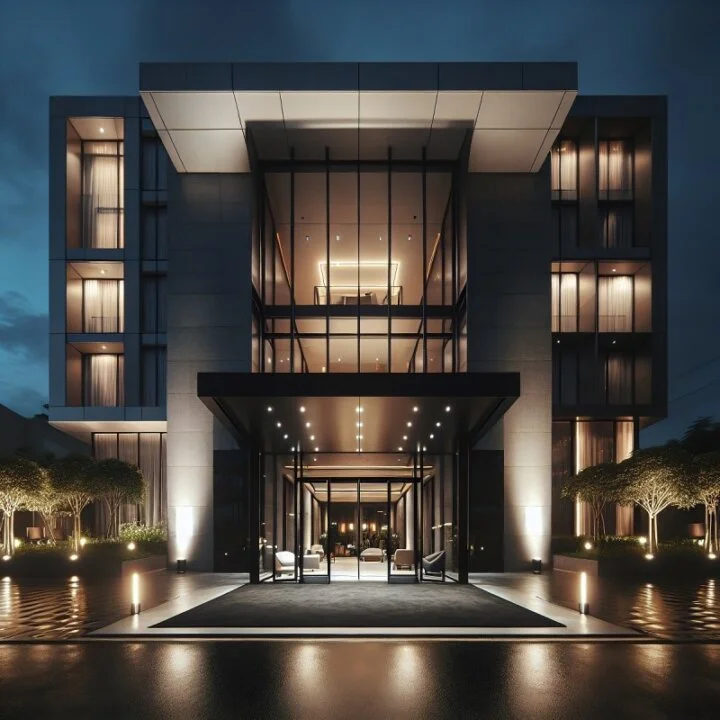
Hotel lighting is one of the most powerful tools for defining the atmosphere, directing guest flow and reinforcing the brand’s visual identity. Visioluce presents you with the top 10 creative hotel lighting ideas, based on current professional principles in the hospitality industry:
Exterior facade lighting as a visual invitation
The lighting of the hotel facade is the first visual interaction guests have with the location, so it needs to be memorable yet subtle. By outlining the architecture, highlighting decorative elements and using color temperatures, you can create a great impression. Exterior lighting should be visible from a distance, but discreet, so as not to disturb guests’ rooms.
How to implement – Visioluce recommendations
–Use weatherproof LED fixtures with controlled light distribution to emphasise the building’s contours;
-Choose a color temperature between 2700K-3500K for a welcoming atmosphere and avoid cold white lights.
-Introduce architectural accents for key elements such as the main entrance, hotel logo or vegetation patch;
-Integrates presence and daylight sensors to optimise energy consumption at night.
Layered lighting for lobbies and reception areas
The reception area and hotel lobby should facilitate a comfortable welcome and easy orientation. Layered lighting (general, accent and task lighting) becomes the main tool to create this ambience. A well-structured lighting plan for the lobby includes ambient lighting for the general space, accent lighting for decorative elements and task lighting for the reception or orientation areas.
Key elements
-General lighting: suspended or recessed fixtures with diffused light, for uniformity;
–Accent lighting: spotlights or LED strips that highlight design elements, art, plants or textured walls;
-Orientation lighting: lines of light integrated into the floor or walls, for discreet guidance to elevators, rooms or public areas;
-Dimmer control and lighting scenarios – allow the transition from an active daytime atmosphere to a relaxing evening one.
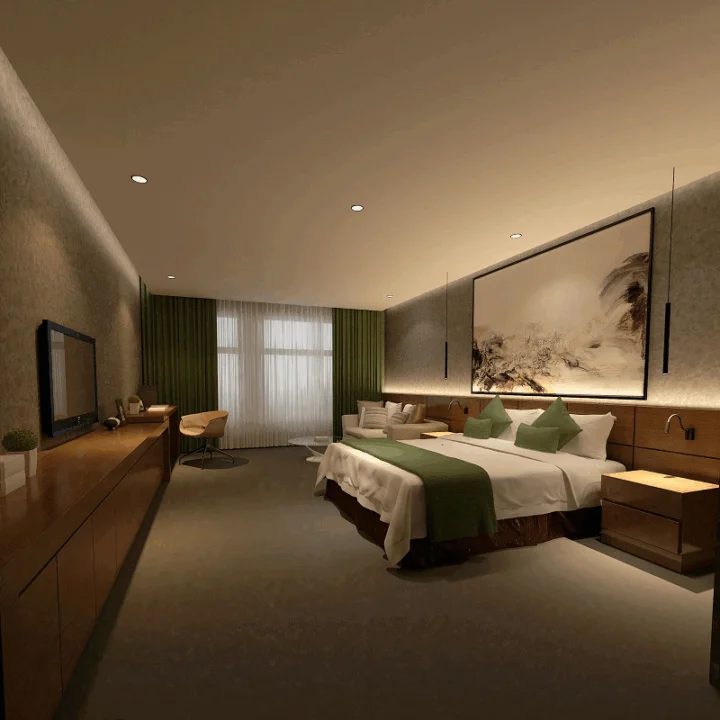
Hotel room lighting – comfort and personalisation
Hotel room lighting is one of the most important elements in the guest experience. Modern hotel design is all about personalisation – allowing each guest to adjust the lights, intensity, and active zones to their preferences. That’s why room lighting needs to be varied, intelligently placed, and controlled to provide maximum flexibility.
-main lighting with medium intensity, easily dimmable, for general activities;
-Bedside reading lamps, with adjustable arms or integrated fixtures, for reading without disturbing your partner;
-LED strips or indirect lamps – warm light (~3000K) that creates atmosphere;
-Avoid direct and dazzling lights – place sources so that they do not create shadows on the face or visual discomfort.
Lighting in corridors and circulation areas – discreet guidance and safety
Hotel corridors and circulation areas should be illuminated for safety, orientation and visual coherence with the hotel design. Lighting should not be too intense, but not too dim – a balance between efficiency and atmosphere is ideal.
Implementation specifics
-Low-level floor or wall lighting for subtle, unobtrusive guidance as guests move around at night;
-Uniform distribution, to avoid dark or disturbing areas;
-Presence sensors for energy efficiency;
-Color temperature between 3000K-3500K, to maintain visual coherence with the rest of the hotel.
Restaurant & hotel bar lighting – atmosphere and experience
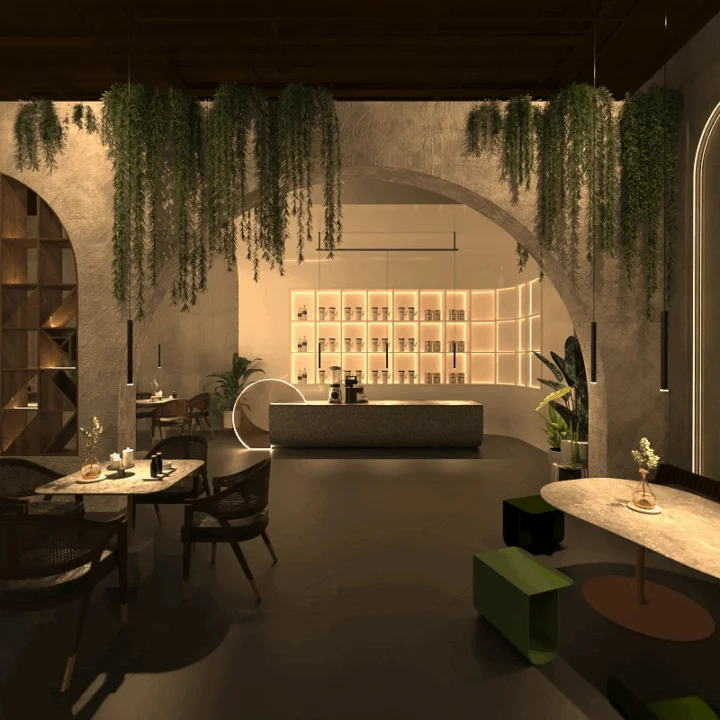
The restaurant and bar area of a hotel is a focal point for guests. The lighting here must support the service, visual comfort, but also accentuate the specific atmosphere: fine-dining, casual, lounge, café lighting, etc. Layers of light, contrast and accent are needed to delimit the areas and create the desired ambience.
Practical applications
-Table lighting: suspended lighting fixtures above the tables, warm light (~2700-3000K), diffused for visual comfort;
-Accent lighting on decorative elements: beverage shelves, architectural details, plants – through LED strips or directional spotlights;
-Bar lighting: mix of decorative and functional – LED strips under the bar, indirect lighting for shelves, to create visual impact;
-Light scenarios: stronger when serving meals, calmer and more relaxing after dark, through dimming.
Spa, wellness and relaxation area lighting – comfort and privacy
In hotel spas and wellness areas, lighting should immediately induce relaxation, calm and safety. A warm, low-intensity light that does not create harsh shadows is important.
Visioluce Recommendations
-Ideal color temperature: ~2700K – 3000K, for a feeling of warmth and relaxation;
-Indirect lighting: hidden LED strip, diffused light from the wall or ceilings, to avoid visible sources that may disturb.
-Accent on treatment areas: subtly focused light, combined with the overall low ambient;
-Automation: scenarios that adapt to the type of service (massage, sauna, indoor pool) and a centralised dimmer.
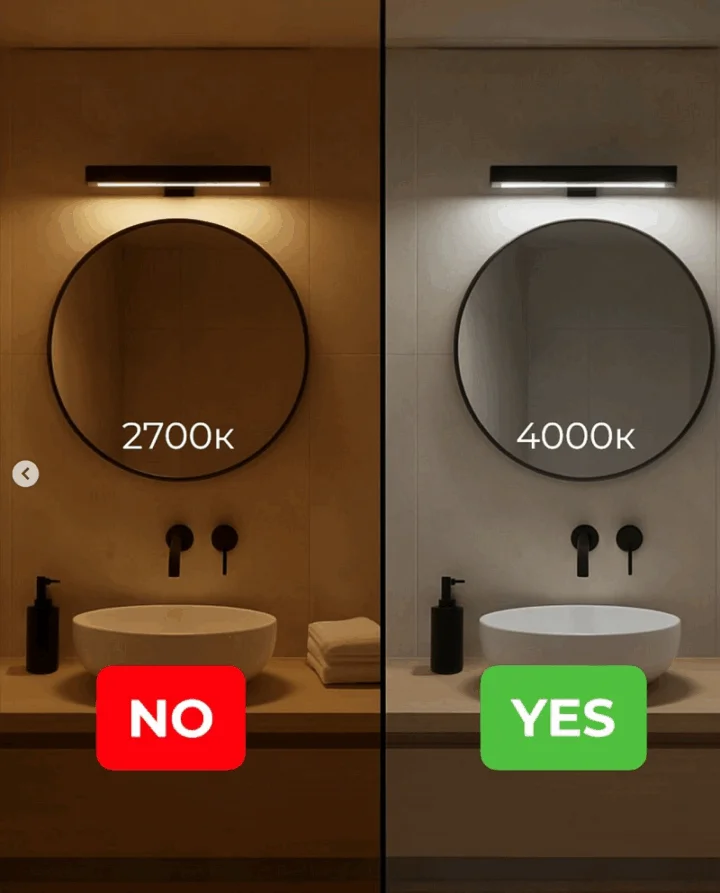
Architectural lighting to highlight interior details
Architectural lighting is the creative component that transforms a hotel interior from functional to memorable. This type of lighting highlights textures, materials, volumes, design corners – enhancing the visual appearance and identity of the location. In hotel design, you need to make sure that these accents integrate harmoniously with the general lighting and do not become distracting.
Implementation tips
-Use wall-washers or linear lights to accentuate textured walls, columns, vaults, or catch architectural details;
-Create contrast between the accented areas and the surrounding space – contrast helps create depth and visual interest;
-Make sure that the light distribution does not create glare – choosing fixtures with anti-glare diffusers is important;
-Integrate lighting colors if the interior design allows, to differentiate areas (for example bar vs lounge).
Smart lighting & automated control – flexibility and efficiency
Modern technology allows hotels to implement intelligent lighting systems within lighting projects dedicated to the hospitality industry. These are adapted to the time of day, to the flow of guests or to thematic scenarios. Automated control brings added value: personalised experience, reduced consumption and increased comfort.
Recommended items by Visioluce
-Dimmers and pre-set scenarios for different times (check-in, dinner, evening, night);
-Presence sensors, daylight sensors – optimize energy consumption especially in corridors or public spaces;
-Centralized control, integrated with the hotel system (BMS/IMS) – allows efficient management of lighting by zones, by floors;
-Integration with ambient lighting (RGB) in lounge/bar areas to create themed experiences.
Energy efficient lighting – sustainability and low costs
A modern hotel must not only be beautifully lit, but also energy-efficient. The right choice of technology, lighting sources and control brings significant savings. The basic principles include the use of LEDs, optimization of lighting levels, light distribution and automated control.
Practical recommendations
-Choose LEDs with high efficiency, long lifespan, good CRI (for correct color rendering);
-Configure areas where lighting can be reduced in intensity (corridors at night, less-used spaces);
-It uses presence sensors and automatic light intensity control, depending on natural light;
-Plan maintenance: LED-supported lighting reduces the frequency of interventions and associated costs.
Thematic lighting and personalised branding experiences
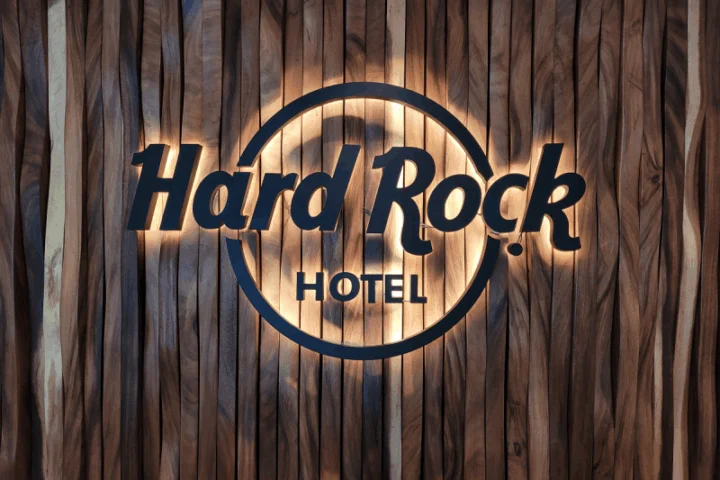
To differentiate a hotel, lighting can become an integral part of the visual identity. The use of themed lighting, interactive decorative light elements, personalised colours and lighting scenarios adapted to the season, or events increases the memorability of the experience. Lighting thus becomes not only functional, but also part of the hotel’s brand story.
Recommendations from Visioluce
-Create “selfie spots” or lounge areas with colorful accent lighting that invite photo-taking and sharing on social media;
-Adapt the lighting scene for special events: celebrations, conferences, launches, parties – to expand the use of the hotel;
-Integrate ambient lighting in the hotel’s brand colors – for example, LED strips on the ceiling in customized shades.
|
Lighting idea
|
Detailed description
|
Lighting fixtures recommended by Visioluce
|
|
|
It highlights the hotel’s architecture, outlines the building’s volume and creates a strong first impression. It uses controlled light distributions and warm temperatures for a welcoming look.
|
LED projectors, wall-washers, outdoor wall lights, waterproof LED lines, ground uplights
|
|
Layered lighting for the lobby
|
A combination of general, accent and task lighting to create a welcoming, cohesive and elegant space. Perfect for reception and social areas.
|
Decorative pendants, recessed LED spotlights, directional spotlights, accent LED strips
|
|
Lighting for hotel rooms
|
Comfortable, intimate and functional atmosphere. Includes dimmable general lighting, reading lamps and indirect ambient lighting.
|
LED ceiling lights, bedside lamps, arm reading lamps, hidden LED strips, decorative wall lights
|
|
Corridor lighting
|
Provides guidance, safety and visual continuity without disturbing guests. Ideal with presence and low intensity sensors.
|
Wall light lines, guide lights, floor lights, wide-spread downlights
|
|
Restaurant & bar lighting
|
Create the right atmosphere (fine-dining, lounge, bar). Table lighting, visual accents and decorative lights.
|
Table lamps, accent spotlights, LED strips for the bar, decorative fixtures for the lounge
|
|
Lighting for spa & wellness
|
Warm, diffused, relaxing light, without glare. Emphasis on comfort and special scenarios for therapies.
|
Indirect LED strips, diffused light wall lights, soft spotlights, underwater pool lights |
|
Interior architectural lighting |
It highlights textures, walls, columns and design elements. It creates depth and visual identity.
|
Wall-washer, linear LED profiles, adjustable angle spotlights, lights integrated into furniture
|
|
Smart & automated lighting |
It allows variable scenarios, dimming, centralized control, sensors and energy savings.
|
DALI/Smart compatible LED fixtures, presence sensors, smart controllers, dimmers
|
|
Energy-efficient lighting
|
It uses high-performance LED sources, high CRI, long life and low consumption. Ideal for areas with heavy traffic.
|
LED panels, LED tubes, efficient spotlights, economical LED strips with high efficiency
|
|
|
Create visual identity through colours, photo zones, special effects, and thematic atmospheres.
|
RGB/RGBW fixtures, colored LED lines, decorative projectors, and customised light panels
|
Frequently asked questions about lighting in hotels
Here’s what you need to know about a hotel’s outdoor lighting and how to use indoor lights in Horeca locations:
Why is lighting so important in a hotel?
Lighting influences the atmosphere, guest comfort, how spaces are perceived, and even customers’ decision to return. A well-lit hotel conveys professionalism, elegance, and a clear visual identity.
What type of lighting is best suited for the lobby and reception?
Layers of light are recommended: general, accent and task lighting. The combination of pendants, directional spotlights and LED strips creates a welcoming and modern space.
How can I create an atmosphere in hotel rooms through lighting?
The atmosphere is achieved by using warm light (2700K–3000K), indirect lighting and dimmable fixtures. Reading lamps and decorative fixtures add comfort and personality.
What solutions are recommended for corridor lighting?
Corridors should be well-lit but not overly bright. Floor lighting, wall lamps and presence sensors are essential for safety and energy efficiency.
How can I create a memorable experience in the restaurant and bar area?
By using table lighting, decorative lights and accents on shelves or architectural elements. Different scenarios for day and evening go a long way in creating the right atmosphere.
What type of lighting is suitable for spa and wellness areas?
Diffuse, warm and soothing light is recommended, without direct sources that can create discomfort. Indirect lighting and automatic scenarios contribute to total relaxation.
What is architectural lighting, and why is it useful in a hotel?
Architectural lighting highlights textures, materials and design details. It helps increase the visual quality of spaces and contributes to the hotel’s premium identity.
Are smart lighting systems worth implementing?
Yes. They allow intensity control, scenario adjustment, presence detection and energy consumption reduction, which optimises long-term costs.
How can I reduce lighting costs in a hotel?
By using LED technology, motion sensors, natural light control, and choosing fixtures with high efficiency and long lifespan.
What type of lighting helps reinforce the hotel’s brand identity?
Lighting design, personalized colors, RGB accents, and photo-friendly decorative areas reinforce the hotel’s brand identity and lay the foundation for memorable guest experiences.
Hotel lighting is not just a technical project, but also a model for optimizing costs and strengthening the respective brand. By implementing creative ideas from Visioluce.com you can transform spaces – from the exterior of the building to the guest rooms – into a memorable experience. Invest in a well-thought-out design, use quality equipment and accessories, with the help of the recommendations received.


